Hospital Fixed Asset Inventory: Compliance and Safety Guide
Hospital Fixed Asset Inventory: A Practical Guide to Compliance and Operational Safety
What Is Hospital Fixed Asset Inventory?
Hospital fixed asset inventory is the physical verification and documentation of medical equipment, facility assets, technology, and support items. The process connects each item with a reliable record. That record can include its location, condition, custodian, tag, serial number, and financial reference.
In healthcare, accurate asset information supports more than accounting. It also supports equipment availability, maintenance planning, recall response, and operational accountability. Therefore, hospitals need a controlled process rather than an occasional manual count.
DOIT Integrated Solutions provides field inventory, photography, classification, Barcode, QR, and RFID tagging. Our team then prepares structured, auditable data for the client’s finance, operations, and ERP teams.
The Direct Answer: Why Does a Hospital Need an Accurate Asset Register?
A hospital needs an accurate asset register to know what equipment exists, where it is located, who controls it, and what condition it has. This visibility supports financial reporting, maintenance coordination, audit preparation, and safer operational decisions.
The register should cover medical devices, laboratory equipment, IT assets, furniture, facility systems, and other capital items. It should also distinguish active, idle, damaged, under-repair, missing, obsolete, and disposed assets.
How Asset Visibility Supports Operational Safety
Clinical teams depend on equipment that works when needed. However, unclear records can hide overdue maintenance, misplaced devices, or equipment that has left service. As a result, asset verification becomes an important operational control.
An organized inventory supports four practical outcomes:
| Control area | How accurate data helps |
| Maintenance | Teams identify equipment, locations, service status, and due dates more quickly. |
| Recall response | Managers can search the register for affected models or serial numbers. |
| Equipment allocation | Departments can find available items before requesting new purchases. |
| Decommissioning | Staff can remove retired equipment from active operational lists. |
Asset inventory does not replace clinical safety procedures. Instead, it gives those procedures better information.
What Should a Hospital Inventory Record Include?
A useful record includes more than a description and an asset number. First, capture the identity of the item. Record the manufacturer, model, serial number, and tag ID. Next, record the exact location and responsible department.
Then, add the condition and operational status. Depending on the hospital’s policy, the record may also include service dates, calibration information, warranty details, purchase references, and disposal status. Finally, link a clear photograph to the asset record when the project scope requires it.
The information should follow one naming and classification policy. Otherwise, similar items may appear under different descriptions. DOIT can help define the required fields before fieldwork starts.
A Non-Disruptive Hospital Inventory Workflow
Hospital work requires careful coordination. Patient care, sterile areas, and clinical routines must remain the priority. For that reason, the inventory plan should match the hospital’s operating schedule.
1. Scope Assessment
The project begins with a review of buildings, departments, asset classes, access rules, and reporting needs. The team also confirms areas that require special coordination.
2. Physical Verification
Field specialists locate each asset and compare it with available records. They capture the required identity, location, condition, and custodian data.
3. Photography and Tagging
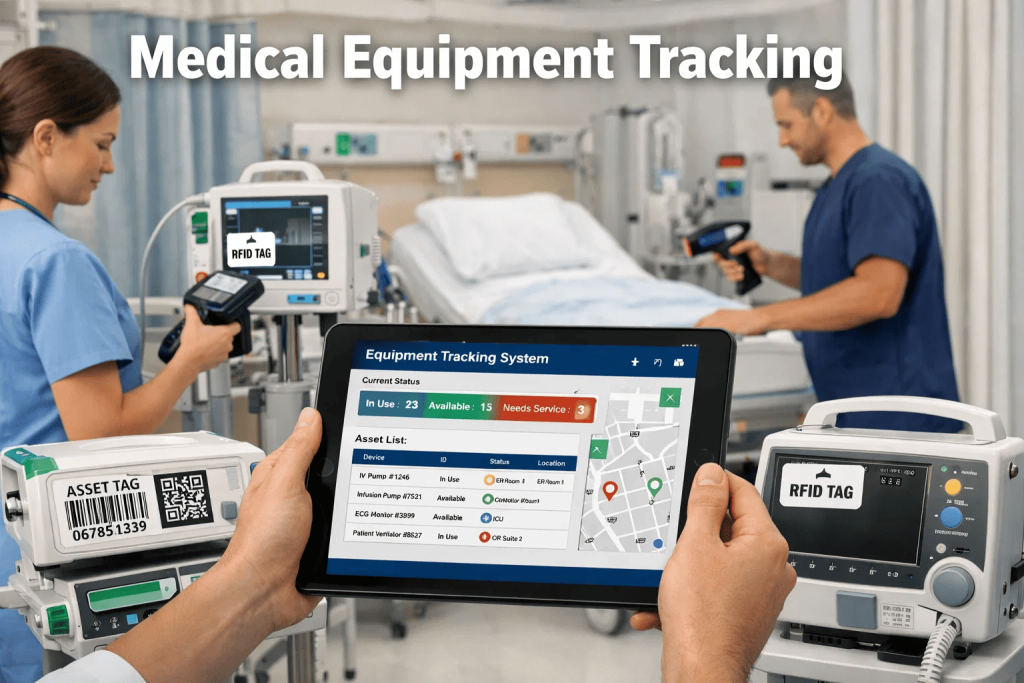
The team links photographs to records and applies approved Barcode, QR, or RFID tags. Tag materials should match the asset surface and operating environment.
4. Data Review and Reconciliation
DOIT reviews the field findings and identifies missing records, duplicates, incorrect locations, and other exceptions. The client then decides the appropriate financial or operational action.
5. Structured Delivery
The final output can include an asset register, exception report, photographs, tag list, location summary, and other agreed deliverables. Data can also be structured for the client’s existing ERP or maintenance platform.
How Does DOIT Support Healthcare Organizations?
DOIT combines field expertise with structured data management. We do not replace the client’s ERP. Instead, our platform prepares verified field data for the systems the client already uses.
The workflow can support medical centers, healthcare networks, laboratories, and other regulated facilities. However, the exact scope depends on the site, asset classes, access rules, and required outputs. A scope assessment should come before any quotation or implementation decision.
“A reliable hospital asset register begins with accurate evidence from the field. DOIT helps organizations turn that evidence into structured information for finance, operations, and maintenance”.
Conclusion: Build a Safer, More Auditable Asset Foundation
Hospital fixed asset inventory gives healthcare leaders a clearer view of physical resources. It supports maintenance coordination, financial control, operational accountability, and audit preparation. Most importantly, it reduces uncertainty around equipment identity, location, and status.
Request a Scope Assessment from DOIT Integrated Solutions. Our specialists can help your organization verify, photograph, classify, tag, reconcile, and organize fixed asset data. You can also request a technical consultation or quotation based on your sites and asset categories.
Category
Recent Posts

Educational Asset Management for Schools and Universities | DOIT